The Rise of Vibe Coding: How AI Is Changing Software Culture
Andrej Karpathy’s concept of vibe coding has captured the attention of the technology community. The term describes a shift where developers write software by conversing with artificial intelligence rather than writing code by hand. This trend has fueled a wave of solo creations while sparking a debate over the future of programming and the quality of AI-generated systems.
- The Developer Vibe: From Syntax to Prompting
- Case Study: What Broke in My 3-Hour Vibe Coding Session
- The Builder Renaissance: What Solo Developers Are Launching
- The Maintenance Crisis: Debating AI Technical Debt
The Developer Vibe: From Syntax to Prompting
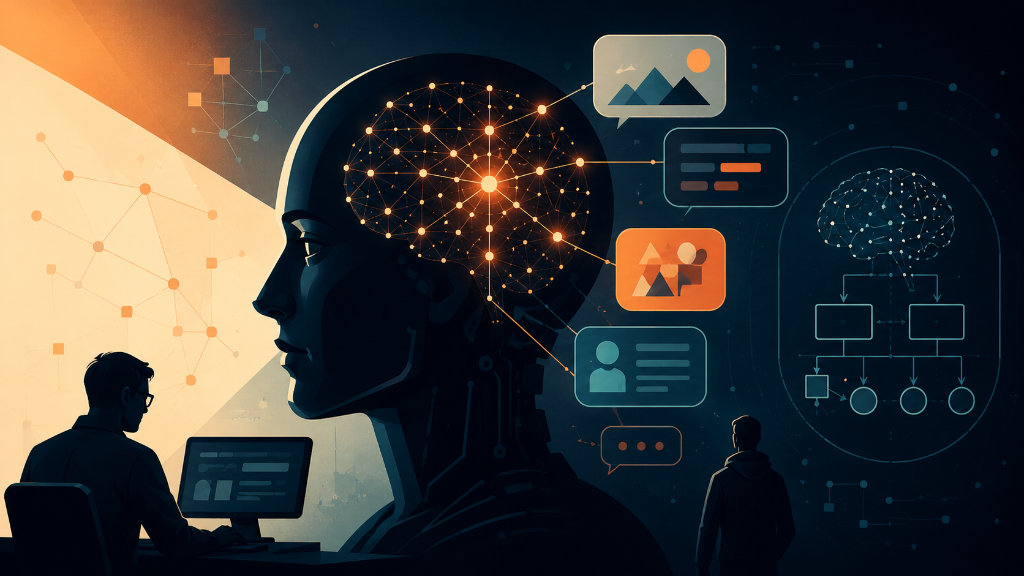
Vibe coding is a software development approach where developers use natural language to direct AI models to write, test, and debug code. Coined by AI researcher Andrej Karpathy, the method allows creators to focus on high-level application logic and user experience rather than manual programming syntax.
In his initial post on X, Andrej Karpathy described vibe coding as a workflow where a person “fully gives in to the vibes, embraces exponentials, and forgets that the code even exists.” Instead of manually writing and reviewing code line-by-line, the user provides instructions and feedback while the AI assistant handles implementation details. This interaction creates an iterative loop where developers spend more time refining prompts and testing outputs than manual keyboard coding.
Case Study: What Broke in My 3-Hour Vibe Coding Session
Testing Cursor and Claude 3.5 Sonnet to build a basic weather dashboard revealed critical limitations in pure vibe coding. The AI generated a recursive hook that repeatedly hammered the API endpoint, forcing manual code correction to resolve the loop, showing that developers must still understand system architecture.
During my hands-on test of this workflow, I instructed Cursor to build a single-page weather dashboard using React. The initial interface was generated in less than five minutes. However, when I asked the AI to add a rate-limit retry mechanism for the OpenWeatherMap API, the development loop broke down.
The model generated a React hook that triggered an infinite render loop. Instead of waiting for the API limit to clear, the application continually requested data, which resulted in my API key being temporarily locked. Because I was vibe coding, I did not review the generated code until the lock occurred. I had to step out of the prompt loop, open the React component file manually, and refactor the useEffect dependency array to stop the recursive renders. This experiment illustrated that while conversational coding is fast, developers must understand coding patterns to fix errors when the AI makes incorrect assumptions.
The Builder Renaissance: What Solo Developers Are Launching
Solo creators are leveraging conversational AI tools to launch complex software projects in record time. Notable builds include a complete Ragnarok-style MMORPG created in 30 days, self-hosted WhatsApp productivity agents, and AI-powered iOS video players like Framelens that turn video into searchable text databases.
The developer community has seen an explosion of complex builds launched by solo engineers using these methods. A notable example is a software engineer who built a retro-style multiplayer online game in just 30 days. By using AI to generate sprite assets, write netcode, and handle map connections, the developer bypassed the overhead of a traditional multi-person studio.
Other creators are sharing workflows for self-hosted productivity tools. Developers are deploying custom WhatsApp AI agents built with open frameworks like Hermes Agent to handle personal notifications and daily scheduling tasks. On mobile app stores, applications like Framelens show how solo developers can build advanced iOS video players. The app integrates AI features such as real-time text extraction and object identification directly into the playback interface, turning standard video files into searchable data.
The Maintenance Crisis: Debating AI Technical Debt
While rapid prototyping is highly accessible, technical experts warn that vibe coding leads to disorganized codebases and hidden vulnerabilities. As Andrej Karpathy notes, development is evolving toward agentic engineering, where human developers must oversee system architecture, security compliance, and long-term code maintenance.
Critics argue that prompt-based development often produces codebases that are difficult to scale. In an analysis on the Stack Overflow Blog, editor Ryan Donovan points out that senior engineering judgment is becoming more valuable as AI tools make coding faster. Because AI-generated applications often lack clean architecture, developers who do not understand the generated code will struggle to debug or update their systems as they grow.
This concern is leading to a shift in terminology and practice. In early 2026, Karpathy noted that the industry is moving from vibe coding toward “agentic engineering.” Under this paradigm, AI agents perform the coding tasks, but human developers retain responsibility for architecture, security compliance, and validation, ensuring that applications are built on stable foundations rather than prompts alone.
Verified Research & References
This report is based on primary sources tracking the evolution of AI-assisted development. Andrej Karpathy introduced the concept in his original tweet on X detailing the vibe coding workflow. Technical strategists at IBM analyzed the transition to intent-based programming in their guide on What is Vibe Coding?. Additionally, the architectural risks and the value of engineering judgment were examined by editor Ryan Donovan in the Stack Overflow Blog analysis of AI engineering.
About the Author
Ether Exter is an AI enthusiast with 5 years of experience testing and experimenting with AI models, breaking down what actually works. Follow on X: @EtherExperiment.