
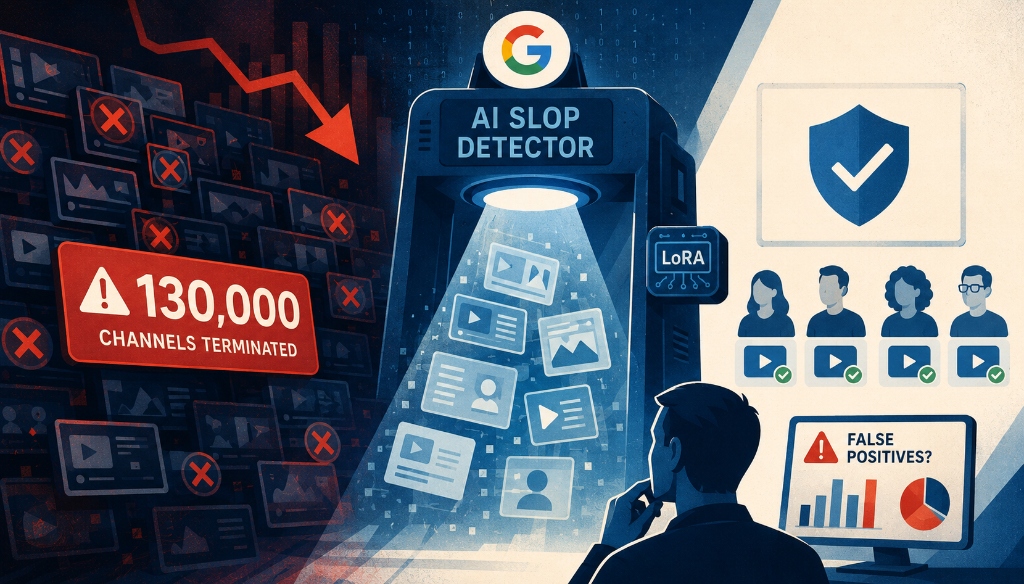
YouTube's AI Slop Detector Hits 130K Channels
Google published research on its S-CTS AI slop detector, terminating 130,000 channels but raising false positive fears for legitimate creators.
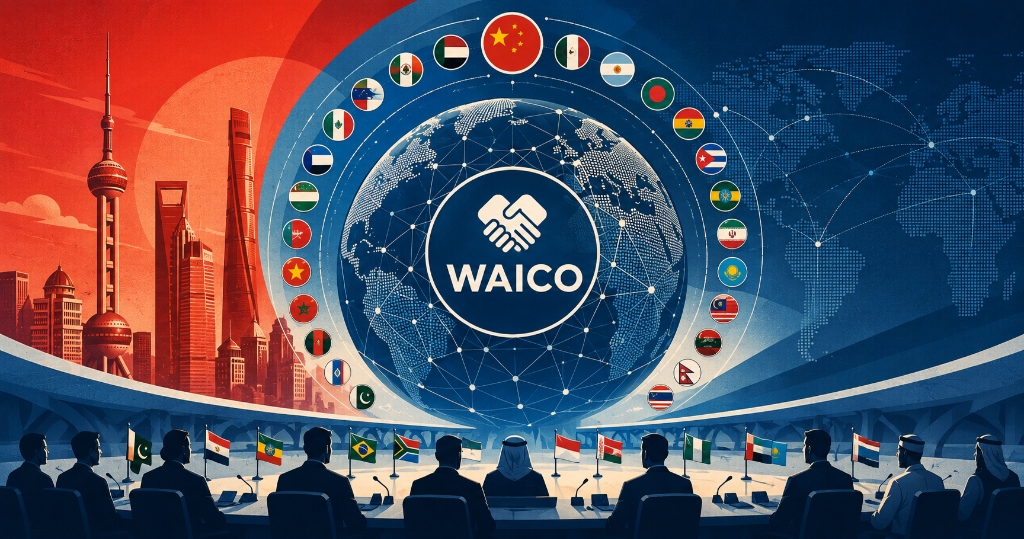
China Launches Global AI Body WAICO: Who's In & Why It Matters
China officially established WAICO with 29 founding member nations at WAIC in Shanghai. Here is who joined, what it targets, and why it matters.

AI Clone Channels Are Stealing YouTubers' Identities - And Platforms Aren't Stopping It
An investigation into the cloning of guitarist Rhett Shull by AI content farms, and the growing backlash against Meta's Instagram likeness-tagging tools.

Rentosertib: Inside the First AI-Designed Drug's Phase IIa Results
Rentosertib is the first AI-designed drug to post positive Phase IIa results for Idiopathic Pulmonary Fibrosis (IPF). Here is what the clinical trial shows.
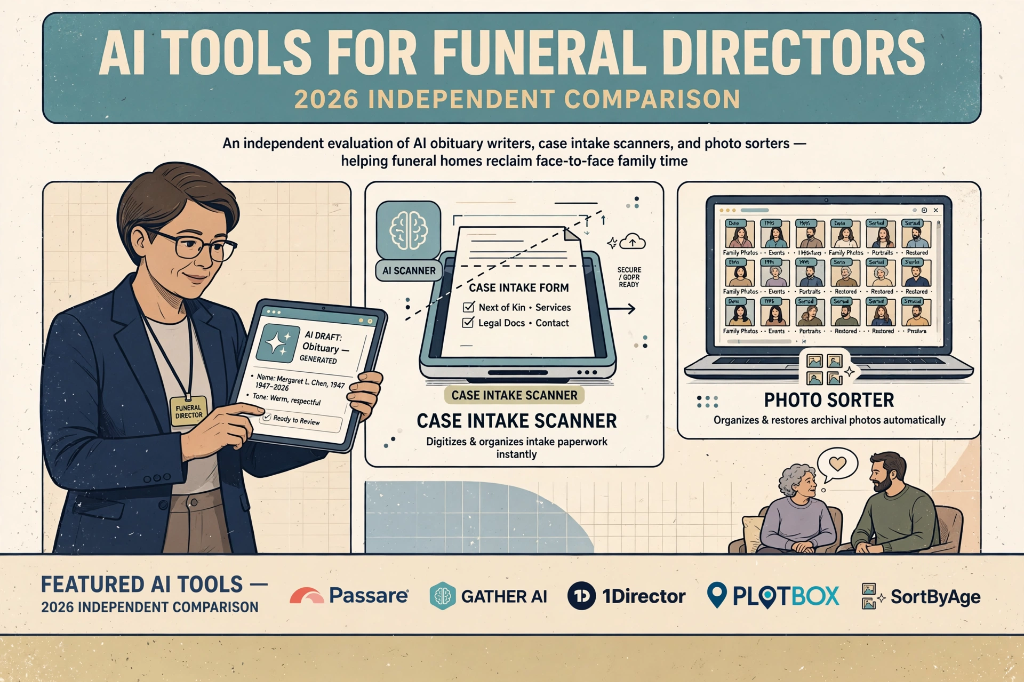
AI Tools for Funeral Directors: 2026 Independent Comparison
An independent evaluation of AI obituary writers, case intake scanners, and photo sorters helping funeral homes reclaim face-to-face family time.
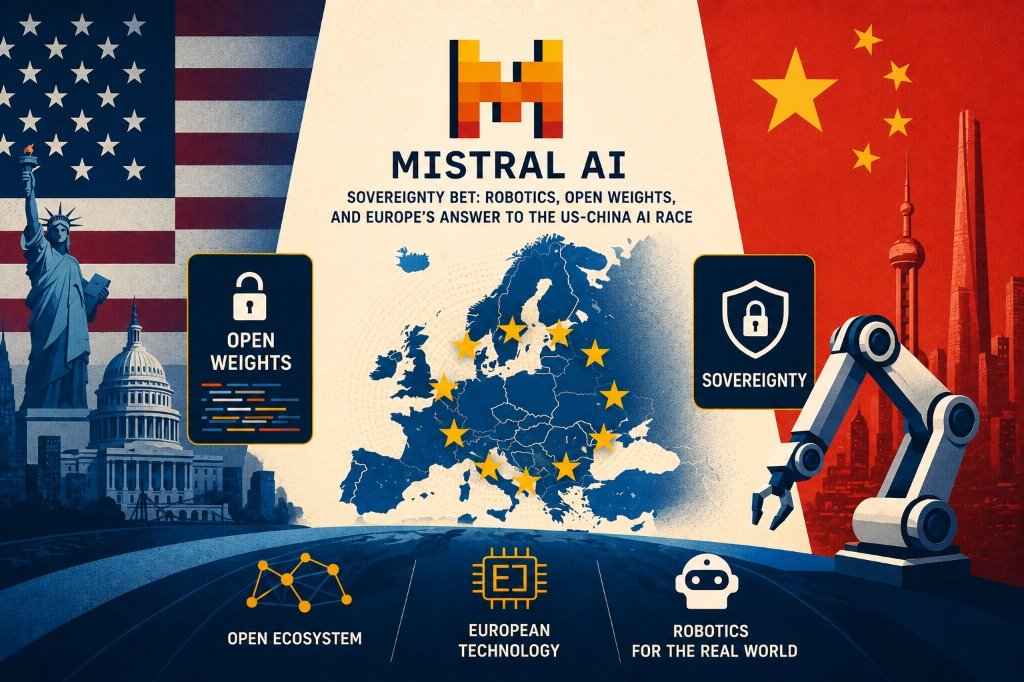
Mistral AI's Sovereignty Bet: Robotics, Open Weights, and Europe's Answer to the US-China AI Race
While US and Chinese labs compete on benchmarks and price, Mistral AI bets on open weights, robotics, and industrial data sovereignty for Europe.

Who Will Own Your Attention When AI Makes Everything?
When anyone can create a movie, a song, or an app by typing a sentence, who decides what's worth watching? And who loses when no one needs the feed?
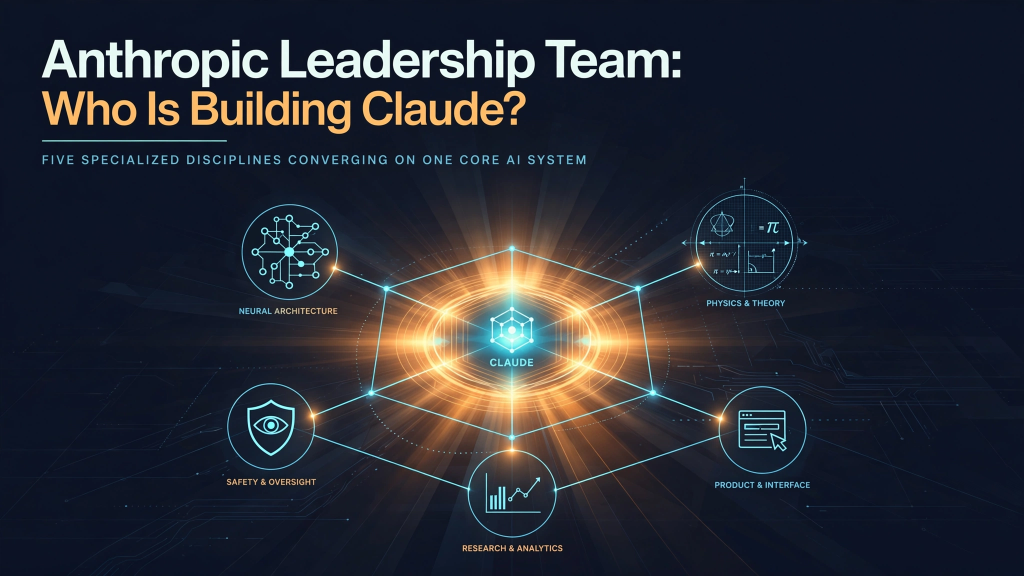
Anthropic Leadership Team: Who Is Building Claude?
Discover the team behind Anthropic. Detailed breakdown of Dario Amodei, Andrej Karpathy, Jan Leike, Jared Kaplan, and Mike Krieger's strategic roles.
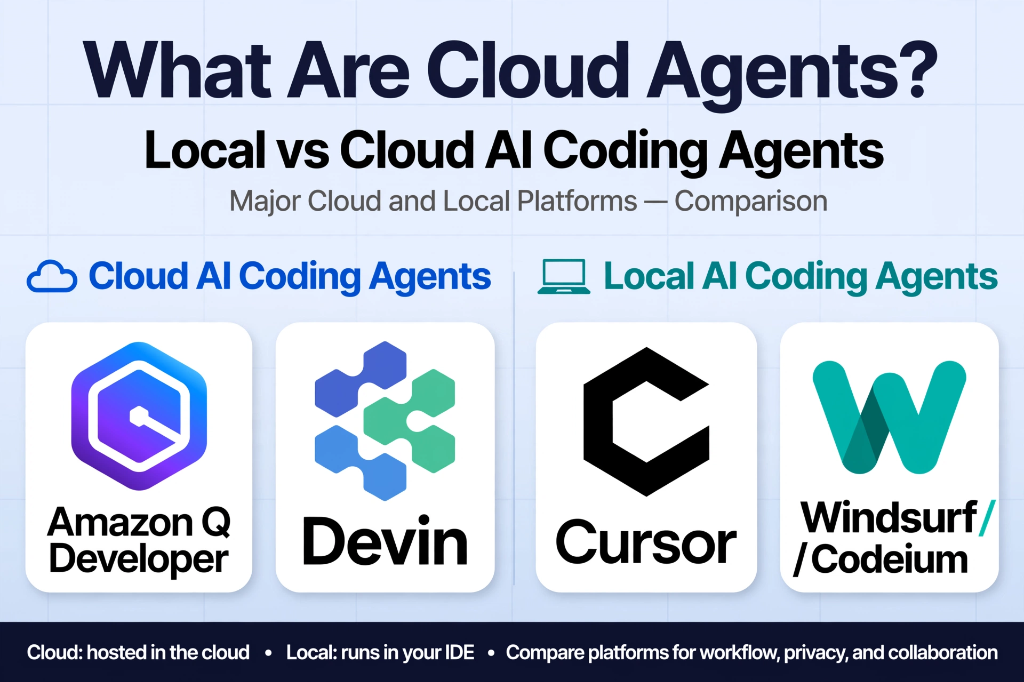
What Are Cloud Agents? Local vs Cloud AI Coding Agents
An independent analysis of Cloud AI Coding Agents, how they differ from local IDE assistants, major platforms, tradeoffs, and setup workflows.
Decoding Artificial Intelligence: News, Controversies, and Core Technical Insights
The artificial intelligence landscape shifts hourly. Corporate press releases offer marketing hyperbole while mainstream media reports often recycle sensationalized narratives. Kinda Peak bridges this gap by presenting independent, fact-backed digital analysis of the generative AI ecosystem. We examine the structural realities behind the algorithms, the economic implications of automation, the legal dynamics of training data, and the subcultures driving open-source technology. Our coverage spans three distinct AI categories: Controversies, Products, and Impact.
AI Controversies: Intellectual Property, Safety and Regulations
Algorithm training relies heavily on scraping public data, igniting complex copyright infringement lawsuits and fair use debates. From high-profile courtroom battles involving text creators, visual artists, and model developers, to safety team exoduses at frontier labs, we trace every major scandal and corporate power struggle. As regulatory frameworks like the EU AI Act begin imposing compliance audits, we detail the direct friction between aggressive market expansion and critical AI alignment safeguards.
AI Products: Objective Benchmarks & Real-World Audits
With commercial APIs, closed-source systems, and open-source models launching daily, determining real utility requires independent testing. Kinda Peak evaluates models like OpenAI's GPT series, Anthropic's Claude, Google's Gemini, and Meta's Llama under real-world testing conditions. We run rigorous benchmarks, cost breakdowns, and feature evaluations to verify if capability claims survive actual development environments.
AI Impact: The Realities of Automation, Labor and Culture
The integration of generative tools into professional workflows has transformed the economic and cultural landscape. We investigate the statistics behind labor displacement, job automation, and productivity gains across industries like software engineering, education, and digital art. Furthermore, we trace the developer subcultures, local AI movements, and online discourse shaping how society interacts with automation.
Independent. In-Depth. Multilingual.
Kinda Peak is published in English, Español, Français, 日本語, and Deutsch. Filter our reports by category or sort by time-frames to stay ahead of the curve. The future of technology is happening now—read Kinda Peak to understand what it actually means.
< Frequently Asked Questions />
01. What is Kinda Peak and what kind of AI news does it cover?
Kinda Peak is an independent digital analysis platform publishing deep-dives on the artificial intelligence landscape. We cover AI controversies, big tech corporate moves, independent product reviews, labor market impacts, and modern developer culture, going beyond basic headlines to deliver deep technical and structural context.
02. Is Kinda Peak completely free to access?
Yes. All articles, reports, and evaluations published on Kinda Peak are entirely free to read. There are no paywalls, premium subscriptions, or registration walls, making high-quality AI analysis accessible to everyone.
03. What languages is the Kinda Peak platform published in?
Kinda Peak is natively multilingual, available in English, Español (Spanish), Français (French), 日本語 (Japanese), and Deutsch (German) to provide a global audience with localized, high-quality technology reporting.
04. How does Kinda Peak report on AI controversies and legal disputes?
We track copyright lawsuits, model training scraping practices, safety team departures, and regulatory compliance. Our analysis centers on primary documents like court filings, patent disclosures, and policy briefs from bodies like the Federal Trade Commission (FTC) and the European Commission.
05. What is the EU AI Act and how does it affect AI development?
The EU AI Act is the world's first comprehensive horizontal regulatory framework for artificial intelligence. It classifies systems by risk level, imposing strict compliance, transparency, and data governance obligations on general-purpose AI model developers.
06. Does Kinda Peak cover Big Tech AI corporate strategies?
Yes. We analyze the strategic moves of market leaders like Google, Microsoft, Meta, Apple, and OpenAI, tracking their datacenter infrastructure investments, custom silicon chips, and cloud partnership networks.
07. What is the difference between ChatGPT, Claude, and Gemini?
ChatGPT is built by OpenAI and runs on its GPT model family. Claude is Anthropic's model, optimized for safety and long-context document tasks. Gemini is Google's model, tightly integrated with Search and Workspace. All three are large language models but differ in context window size, pricing, reasoning style, and the tools they can access.
08. What AI products, models, and APIs does the site review?
We run independent audits on frontier LLMs including OpenAI's GPT models, Anthropic's Claude, Google's Gemini, and Meta's Llama series, comparing their context windows, reasoning benchmarks, and API pricing.
09. What is an AI agent and how is it different from a regular chatbot?
An AI agent is a system that can autonomously plan, take actions, call external tools (like web browsers or code runners), and iterate on its results to complete a multi-step goal. A chatbot simply generates a text response in reply to a single prompt, with no ability to act independently between turns.
010. Is generative AI really replacing jobs in the tech industry?
While AI acts as an accelerator, studies show it is shifting job descriptions rather than causing flat layoffs. However, entry-level coding and content moderation roles are experiencing severe downward pressure.
011. What is the AI productivity paradox in software engineering?
The AI productivity paradox describes the phenomenon where automated coding tools speed up initial code writing but increase overall project timelines due to debugging cycles, security vulnerabilities, and code debt.
012. What are the security risks of prompt injection in AI agents?
Prompt injection occurs when malicious instructions are embedded in untrusted data sources (like web pages or document files), causing an active AI agent to execute unauthorized commands or leak private system instructions.
013. What is local AI and how do you run models on consumer hardware?
Local AI involves running quantized LLMs directly on personal computers using tools like Ollama or Llama.cpp, bypassing cloud servers to ensure complete data privacy and offline operational capability.
014. What is vibe coding and why is it controversial?
Vibe coding is the practice of building software by writing informal natural-language prompts and accepting AI-generated code without deeply reading or verifying it. Proponents argue it dramatically accelerates prototyping. Critics, including Ghostty creator Mitchell Hashimoto, argue that shipping unread code introduces hidden bugs, security vulnerabilities, and technical debt that is extremely expensive to fix later.
015. What does 'frontier AI model' mean?
A frontier AI model is one that sits at or near the leading edge of current capability in reasoning, coding, or multimodal understanding. As of mid-2026, frontier models include OpenAI's GPT-5 series, Anthropic's Claude Fable, and Google's Gemini Ultra. The term signals a model that required massive compute to train and whose capabilities define the current state of the art.
016. Why are consumers starting to show fatigue toward AI branding?
Studies show that sixty percent of consumers find the constant labeling of features as 'AI' in marketing copy to be a turnoff, reflecting a shift in public sentiment from initial curiosity to marketing fatigue.
017. How is generative AI impacting the creator economy and YouTube?
Generative tools enable rapid video editing, asset generation, and voice cloning. However, controversies like AI music systems generating tracks based on deceased creators are driving severe community pushback.
018. What is the difference between open-source and closed-source AI models?
Open-source models (like Meta's Llama) publish their weights for anyone to download and customize. Closed-source models (like GPT-4o or Claude 3.5 Sonnet) are gated behind proprietary APIs controlled by their developers.
019. How does Kinda Peak ensure its technology analysis is reliable?
We rely on verifiable data, code compilation tests, benchmark results, and primary source documents, separating objective analysis from speculative marketing claims.
020. What are LLM hallucinations and can they be fixed?
Hallucinations are plausible-sounding but factually incorrect outputs generated by LLMs. They are inherent to the probabilistic nature of transformer architectures, though mitigated via Retrieval-Augmented Generation (RAG).
021. How does Retrieval-Augmented Generation (RAG) improve AI accuracy?
RAG connects an LLM to a verified external database. Before generating an answer, the system retrieves relevant documents and uses them as source context, reducing hallucinations and providing citations.
022. What is agentic workflow and how does it differ from single prompts?
Agentic workflows use iterative loops where AI models analyze tasks, plan sub-steps, execute tools, evaluate results, and refine their outputs, rather than generating a single direct response.
023. What are context windows in large language models?
A context window is the maximum amount of text an LLM can process in a single query. Large context windows allow models to analyze entire codebases or long PDF documents in one prompt.
024. How can I contact Kinda Peak for media inquiries or partnerships?
You can contact our team through the dedicated Contact Us page (kindapeak.com/contact) for editorial tips, correction requests, or business partnership inquiries.
025. How does Kinda Peak maintain editorial independence?
We are self-funded and do not accept advertiser influence over our reporting. We do not publish sponsored content disguised as news, maintaining a strict barrier between monetization and editorial direction.