The cheapest ticket FIFA advertised for this World Cup was $60. Football Supporters Europe filed a complaint with the European Commission in March saying those tickets “barely existed” and were gone before public sales opened. On opening day, cameras panned across empty red seats at Estadio Akron in Guadalajara, FIFA declared an attendance of 44,985 out of 45,664 capacity, and the most visible story from Day 1 of the biggest World Cup in history was not a goal. It was a gap in the stands.
That is the gap between what FIFA sold and what showed up.
What Actually Happened at Estadio Akron
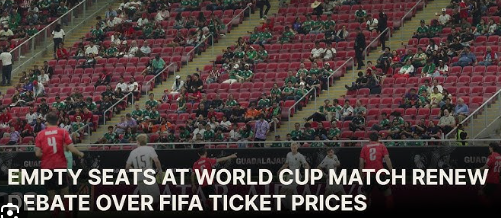
South Korea beat Czechia 2-1 at Estadio Akron in Guadalajara on opening day, but the match was overshadowed by rows of empty red seats visible across the arena, particularly in the center of the east stand and near the pitchside VIP section. Tickets in the lower bowl of the venue — the second-smallest stadium being used at this year’s tournament — cost $500, while seats along the sidelines in the upper tier were priced at $400.
FIFA declared the contest was nearly sold out with an official crowd of 44,985. The maximum World Cup capacity at Akron stands at 45,664. The math says 679 empty seats. The cameras said something different. A sold ticket and an occupied seat are not the same thing — and when the gap between those two numbers sits in the VIP section and broadcasts to a global audience during the opening weekend, the optics problem is FIFA’s to own.
The Mexico opener at Estadio Azteca told a different story. More than 80,000 fans saw Mexico beat South Africa 2-0 in a packed Azteca Stadium — the contrast making Guadalajara’s empty sections look worse by direct comparison within the same opening day broadcast window.
The Pricing Architecture That Built This Problem
FIFA has faced widespread criticism for the dynamic pricing model employed for ticketing in North America, where demand effectively determines how much a seat costs. The range was $60 to $6,730. For one person to attend a game in each of the eight rounds, the cost reaches $5,225.
The base ticket prices for the tournament’s opening match in Mexico ranged from $370 to $1,825 during the October 2025 release phase. The most expensive ticket for the World Cup Final in New Jersey stood at $6,730. The bid book FIFA submitted in 2018 when lobbying for hosting rights had proposed Final tickets ranging from $128 to $1,550. The actual Final ticket ceiling landed at more than four times the projected maximum.
Canada’s debut against Bosnia and Herzegovina left over 1,000 of the 44,315 seats at BMO Field unsold, with a reported attendance of 43,002. The unsold tickets that remained available in the hours before kickoff were offered at prices between $1,645 and $2,240, per The Independent.
The $60 Ticket That Didn’t Really Exist
FIFA President Gianni Infantino defended the pricing model this week, saying the $60 entry price “is the lowest entry price of any of the American sports in the playoff phases” and that demand had exceeded expectations “by a factor of 10 or more,” with more than six million tickets sold.
Football Supporters Europe filed a complaint with the European Commission in March, accusing FIFA of shutting ordinary fans out of the tournament by imposing prices that far exceed previous World Cup events. They said the $60 tickets FIFA advertised “barely existed” and were snatched up before general public sales opened.
The attorneys general of New York and New Jersey issued a subpoena to FIFA over its ticketing practices last month, citing media reports that fans may have been misled about the locations of seats they purchased, and that FIFA’s public statements and ticket releases may have contributed to soaring prices. FIFA has denied the claims.
An NBC News analysis found that attending multiple matches could cost roughly the same as a month of rent in Chicago.
The Geopolitical Layer Nobody Budgeted For
The empty seats are not only a pricing story. The second transcript pulled a layer of context that the ticket price debate alone doesn’t capture.
FIFA projected 1.2 million fans would move through New York during the tournament. Hotel association projections have since fallen to 500,000. The gap between those two numbers sits at the intersection of four separate problems that existed before dynamic pricing was even announced: the US-Iran conflict driving air travel prices sharply higher, Washington’s immigration posture creating friction for international fans uncertain about what they will experience at the border, visa access difficulties for supporters from multiple competing nations, and the logistical reality of a tournament spread across 16 cities in three countries that requires fans to absorb internal travel costs on top of tickets and accommodation.
One hospitality industry representative put it directly: “We’re not seeing a big bump from the World Cup. The geopolitical issues make it a little bit difficult for some of those folks to get here.”
Airbnb is the one platform reporting a genuine upside, as the fans who do make it seek to reduce costs through shared accommodation — which FIFA’s hotel block strategy, quietly dismantled in the weeks before the tournament to push fans back into stadiums, did nothing to help.
What FIFA Needs to Happen Next
The blockbuster fixtures are still ahead. The US vs. Argentina group stage match, the round of 16 at MetLife, the Final on July 19 — those games will sell. The question is whether the opening weekend images of empty premium sections become the defining visual of the tournament or a footnote.
FIFA’s dynamic pricing model backfired on Day 1. The governing body is now in the position of defending attendance numbers that the broadcast footage directly contradicts, while two state attorneys general have subpoenaed its ticketing records and Football Supporters Europe is pursuing a European Commission complaint.
The $40 billion economic windfall FIFA promised the US, Canada, and Mexico remains a projection. The empty seats are already on camera.
Sources
- Football Supporters Europe: Official Complaint to European Commission regarding 2026 World Cup Ticketing
- NBC News Business: FIFA World Cup 2026 Ticketing & Dynamic Pricing Investigations
- The Independent Sport: Estadio Akron Attendance Reports & BMO Field Unsold Ticket Pricing
About the Author
Your 54-year-old dad who spent $11,000 on World Cup tickets while telling the family there was “no money for a holiday,” and has been texting the word “DISGRACE” to the family WhatsApp at 3 AM every time a camera pans to an empty seat.