The Oedipal Turn: Why Aemond Targaryen Kissed His Mother
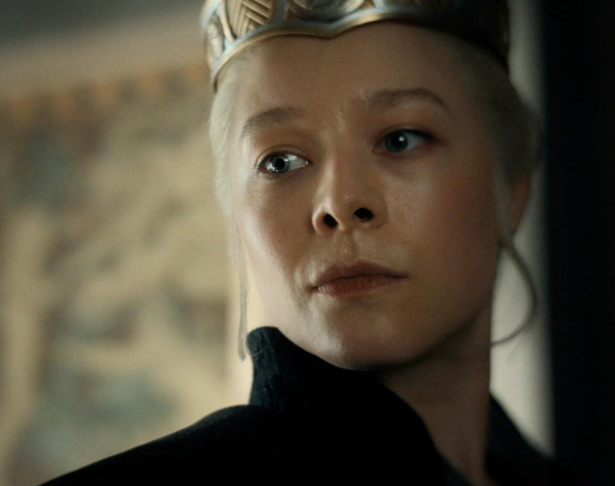
Watching a dictator in a leather eye patch kiss his own mother on the mouth is a bold way to start a television season, but that is exactly how the Greens decided to prepare for a bloodbath. In the premiere episode of House of the Dragon Season 3, “Salt and Sea, Fire and Blood,” the political chess game of Westeros collapses into a Freudian therapy session. Leaning in to kiss Alicent Hightower on the lips is not a random shock tactic; it is Aemond Targaryen’s bid to establish absolute control over the woman who spent two seasons trying to keep him on a leash.
Looking closely at the data, the scene reveals the psychological rot eating away at the Green faction. Aemond has named himself king, outright rejecting the book’s narrative where he merely steps in as Protector of the Seven Kingdoms. His interim regime has all the stability of a tech startup run by a CEO who just discovered microdosing. According to actor Ewan Mitchell in his interview with ScreenRant, the kiss stems from Aemond’s warped understanding of affection, born of childhood neglect and a desperate need for maternal validation. Alicent, played with visible panic by Olivia Cooke, stands frozen. Cooke explained to Entertainment Weekly that Alicent chose to remain completely still to avoid triggering a violent outburst from her highly unstable son.
For digital publishers trying to keep their AdSense metrics green, this Freudian nightmare is the ultimate attention trigger. A mother-son kiss generates the kind of click-through rates that standard military tactics simply cannot compete with. The real story here is the strategic dysfunction of the Hightowers. While Aemond sits on the throne dreaming of dragon battles, Alicent is playing a treasonous double game. She has already negotiated a deal with Rhaenyra Targaryen to open the city gates, promising the head of her eldest son, Aegon II, whom she assumes is still recovering in the Red Keep. Aemond’s refusal to leave the capital ruins her timeline. She is forced to forge a letter in his name to stall the approaching Hightower army.
The Battle of the Gullet: How the Show Sacrificed Jacaerys Velaryon
Rhaenyra’s blockading fleet meets its doom in the Gullet, but the execution of this naval disaster deviates sharply from the historical record in George R.R. Martin’s Fire & Blood. The showrunners merged several distinct plotlines, resulting in a chaotic confrontation that costs the Blacks their most reliable heir.
In the novel, five dragon riders join the defense to repel the Triarchy fleet. The show, however, locks Rhaenyra in her chambers on Dragonstone. In a desperate move to protect his mother from another Rook’s Rest style ambush, Prince Jacaerys Velaryon commands the Queen’s Guard to lock her door. Jace takes the fight to the sea himself, accompanied by Moondancer and the wild card dragon that the writers brought in to replace a fan-favorite character.
Vermax’s Drowning and Jace’s Fate
The tactical execution of the battle shows a massive shift in how dragons are neutralized. Instead of the book’s narrative where Vermax is brought down by an arrow to the eye or a random grapnel, the Triarchy fleet uses specialized naval harpoons. These heavy iron grapples hook the dragon and drag him bodily into the sea. Vermax drowns in the deep waters, unable to break free from the weight of multiple war vessels.
Jacaerys survives the initial crash, unbuckling his saddle and swimming to the surface. He clings to the wooden debris of a burning ship, only to be spotted by Triarchy crossbowmen. A volley of iron-tipped bolts ends his life before he can make it to shore. Unlike the book, where Jace’s body is lost to the sea and never recovered, the show depicts his execution with brutal clarity. It is a massive blow to Rhaenyra’s legitimacy. She is left without her eldest son and heir.
The Rhaena and Sheepstealer Convergence
The biggest controversy of the episode is the presence of Rhaena Targaryen on the back of the wild dragon Sheepstealer. In the book, Rhaena never tames this wild beast; that honor belongs to Nettles, a dragonseed who feeds the dragon sheep every morning until it accepts her presence. By cutting Nettles from the show, the writers chose to merge her arc with Rhaena’s, who abandons her half-brothers on their way to Pentos to seek out the wild beast in the Vale.
This decision backfires during the naval clash. Sheepstealer is an untamed beast that refuses to follow military commands. During the battle, the wild dragon begins attacking allied ships and snaps at Moondancer and Vermax. Jace, realizing that his cousin Rhaena is riding the rogue dragon, orders Vermax to dive away to avoid a friendly-fire collision. This forced maneuver drives Vermax directly into the range of the Triarchy’s grappling weapons. Rhaena’s lack of control over her new mount directly caused Jace’s death.
The Flight of the Broken King: Aegon II and Larys Strong
While the capital falls into Aemond’s hands, the rightful king is currently being carted through the mud like a peasant. Larys Strong has liquidated the wealth of Harrenhal. He transferred the gold to the Iron Bank of Braavos, with the goal of hiding Aegon II in Essos until the rival factions destroy each other. His goal is to hide Aegon II in Essos until the rival factions destroy each other.
Their journey is halted on the outskirts of King’s Landing by a patrol of House Staunton soldiers. Larys attempts to pass them off as merchants heading to White Harbor, but Aegon’s stubbornness nearly gets them killed. To save their lives, Larys is forced to reveal the king’s identity, offering the conqueror’s crown as proof of their status. The patrol detains them, intending to deliver the royal fugitives to Duskondale to face Rhaenyra’s judgment.
The Tale of Two Crowns
The scene highlights the competing symbols of legitimacy in the civil war. Rhaenyra wears the crown of her father, Viserys I, which was originally forged for Jaehaerys I. This crown represents legal decree and the continuity of the previous monarch’s will. Aegon II, conversely, possesses the heavy crown of Aegon the Conqueror, forged from Valyrian steel and rubies.
Larys’s surrender of this crown to a patrol of low-ranking soldiers shows his complete lack of principle. For Larys, the crown is not a sacred relic; it is a bargaining chip to buy another day of life. If Aegon survives the journey to Duskondale, he will have to explain why his Master of Whispers traded the ultimate symbol of Targaryen rule for a safe passage.
The Carnage at the Red Fork: Decapitating the Lannisters
In the Riverlands, the war on the ground is just as brutal as the conflict in the skies. The show combines the Battle of the Red Fork and the Battle by the Lakeshore into a single, bloody engagement where the Lannister host is systematically dismantled by Daemon’s Riverlands forces.
Jason Lannister, the arrogant Lord of Casterly Rock who once tried to court Rhaenyra, meets a gruesome end. He is beheaded during the chaos by Ser Rodrik Dustin, the leader of the northern soldiers known as the Winterwolves. Rodrik Dustin enters the story by throwing Jason’s severed head at the feet of his allies, delivering the famous line: “We’ve come to die for the Dragon Queen.” In the book, Rodrik says this line to Lady Sabatha Frey, but the show repurposes it to emphasize the fanaticism of the northern forces.
Criston Cole’s Existential Dread
Watching this slaughter has a profound effect on Ser Criston Cole. The former Hand of the King has lost the self-righteous anger that defined him in the first two seasons. The carnage of Rook’s Rest has stripped away his illusions of chivalry. He is now hollowed out and cynical.
When Gwayne Hightower attempts to appeal to Cole’s sense of military honor, Cole rejects the plea. He acknowledges that they are all destined to become beasts before the end. Cole’s transition from a proud knight to a shell-shocked soldier reflects the shifting tone of the war. Chivalry is dead, replaced by the mechanical slaughter of dragons and armies.
The Mysticism of the God’s Eye and the Dragonseed Lore
On the shores of the God’s Eye, the newly minted dragonseeds, including Ulf and Hugh, await their orders. The show uses this pause to explore the mystery of dragon bonding, suggesting that the Valyrian bloodline is not as exclusive as the Targaryens claim.
Ulf boasts of his descent from Baelon the Brave, while Hugh’s mother is revealed to be Saera Targaryen, the rebellious daughter of Jaehaerys I who fled to Volantis. Addam of Hull, however, remains an anomaly. His dragon, Seasmoke, sought him out rather than requiring a taming ritual. The show presents two distinct explanations for this event: either the Valyrian bloodlines have spread further than the archives suggest, or the entire concept of dragonrider exclusivity is a political myth fabricated by the ruling class. A third option suggests Seasmoke was simply attracted to Addam’s resemblance to Laenor Velaryon.
Alice Rivers’ Prophecies
The peace of the dragonseeds is shattered by the appearance of Alice Rivers, accompanied by a black goat. The creature evokes the folk horror themes that dominated Daemon’s visions at Harrenhal. Alice, whom the historical accounts of Mushroom describe as a powerful witch, warns the dragonseeds that they are missing the real conflict.
Alice reveals that Rhaenyra needs them at Dragonstone, showing a prophetic awareness of the Battle of the Gullet. Her intervention ensures the dragonseeds depart the God’s Eye, clearing the way for the eventual confrontation between Aemond and Daemon. Alice has already foreseen Daemon’s death in the waters of the lake, and her actions continue to push the characters toward their preordained fates.
Sources
- George R.R. Martin: Fire & Blood, HarperCollins, 2018.
- HBO Broadcast: House of the Dragon Season 3, Episode 1, “Salt and Sea, Fire and Blood,” June 21, 2026.
- Actor Interviews: Olivia Cooke and Ewan Mitchell, Entertainment Weekly, June 2026.
About the Author
Your 34-year-old cousin who sold his childhood home to buy a screen-accurate suit of Kingsguard armor, sleeps in a replica Iron Throne, and writes weekly threatening letters to George R.R. Martin from an undisclosed bunker in Idaho.