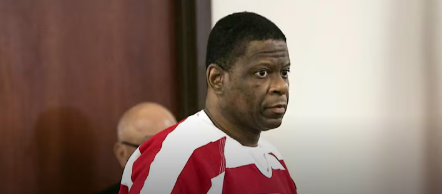
Stacey Stites was strangled to death with her own woven belt, yet the State of Texas is terrified of testing that belt for DNA. On March 23, 2026, the United States Supreme Court declined to review the appeal of Rodney Reed, a Texas death row inmate who has spent nearly three decades protesting his innocence. The decision leaves Reed with virtually no remaining legal options to force the state to test the physical evidence from the 1996 crime scene.
By refusing to hear the case, the court left in place rulings from Texas state courts that rejected Reed’s demands. The state continues to hold that testing the belt, the victim’s clothing, and other physical evidence is unnecessary. Reed remains locked in a cell in the Allan B. Polunsky Unit, waiting for the state to schedule his execution.
The Woven Belt and the March 2026 Denial
The legal battle over the physical evidence centers on a simple request: Reed’s defense team wants to run forensic analysis on the items recovered from the scene where Stites’s body was found. Chief among these items is the woven belt used to murder the 19-year-old Giddings grocery store worker.
The State of Texas has repeatedly refused to allow testing on the belt. State prosecutors argue that the evidence was handled by multiple people during the original trial, which they claim would contaminate any results.
The Supreme Court’s denial of Reed’s petition for a writ of certiorari did not come without friction. A minority of the court pushed back against the decision to ignore the case. The refusal to hear the appeal leaves the legal status of the evidence locked in place, with the state free to move forward with execution proceedings once a date is requested.
The Consensual Affair vs. The Fiancé suspect
The state’s case against Reed rested almost entirely on a single piece of biological evidence: semen found inside Stites’s body. At the time of the trial, prosecutors argued that this was proof of a violent sexual assault and murder. Reed, however, has maintained that he and Stites were having a consensual affair.
Because Stites was engaged to a local police officer, the affair was kept secret. Giddings is a small town where a relationship between a Black man and a white woman engaged to a police officer would have carried significant social risk. Reed’s defense team argues that the semen was present because the two had met consensually the day before her death.
Who is Jimmy Fennell?
The alternative suspect in the case is Jimmy Fennell, Stites’s fiancé at the time of her murder. Fennell was a former police officer in Giddings and later a corporal in Georgetown, Texas.
Reed’s attorneys have pointed to Fennell’s subsequent criminal history. In 2007, Fennell was arrested and later sentenced to ten years in prison for kidnapping and sexually assaulting a woman in his custody as a police officer. During Reed’s appeals, multiple witnesses came forward with statements implicating Fennell. This included a former prison cellmate who claimed Fennell bragged about killing Stites because he discovered she was sleeping with a Black man. Fennell has consistently denied these claims.
Sotomayor’s Dissent: The “Inexplicable” Refusal
The most vocal critic of the Supreme Court’s decision was Justice Sonia Sotomayor, who filed a dissent joined by Justices Elena Kagan and Ketanji Brown Jackson. Sotomayor did not mince words regarding the refusal to allow forensic testing.
In her written dissent, Sotomayor called the State of Texas’s refusal to test the belt “inexplicable.” She noted that the state has access to advanced testing methods that did not exist in 1996. Sotomayor argued that the court was missing an opportunity to address a substantial possibility of wrongful execution, pointing out that testing the belt would either confirm Reed’s guilt or expose a massive failure of justice.
The dissent highlighted the procedural hurdles that Texas courts have used to block the testing. Sotomayor noted that the state’s arguments about contamination do not justify refusing to run the tests, as modern forensic labs are capable of separating touch DNA profiles.
True Crime Interest and Celebrity Advocacy
The case of Rodney Reed has become a major focal point for criminal justice reformers and celebrity advocates. In 2019, a massive public campaign led by Kim Kardashian, Rihanna, and Meek Mill forced the Texas Court of Criminal Appeals to halt Reed’s scheduled execution just days before he was set to die.
The public interest in the case remains high, driven by true-crime documentaries and investigative podcasts. Shows like Netflix’s true crime series have repeatedly highlighted the case’s inconsistencies.
The denial of the appeal in March 2026 has reignited calls for Texas Governor Greg Abbott to grant clemency or issue a moratorium on the execution. Because the Supreme Court has closed the door on the DNA testing appeal, the battle now shifts from the courtroom to the governor’s office.
Sources
- U.S. Supreme Court Docket (March 2026): Rodney Reed v. Texas Denial of Certiorari
- Texas Tribune Legal Analysis: Supreme Court Refuses to Hear Rodney Reed Appeal
- PBS News Report: Justices Sotomayor, Kagan, and Jackson Dissent in Reed Case
- CBS News coverage: Texas Death Row Inmate Rodney Reed Denied DNA Testing by Supreme Court
About the Author
Your paranoid second cousin who lives in a converted shipping container in the woods, has a police scanner playing on a loop, and maintains that the entire judicial system is run by lizards.