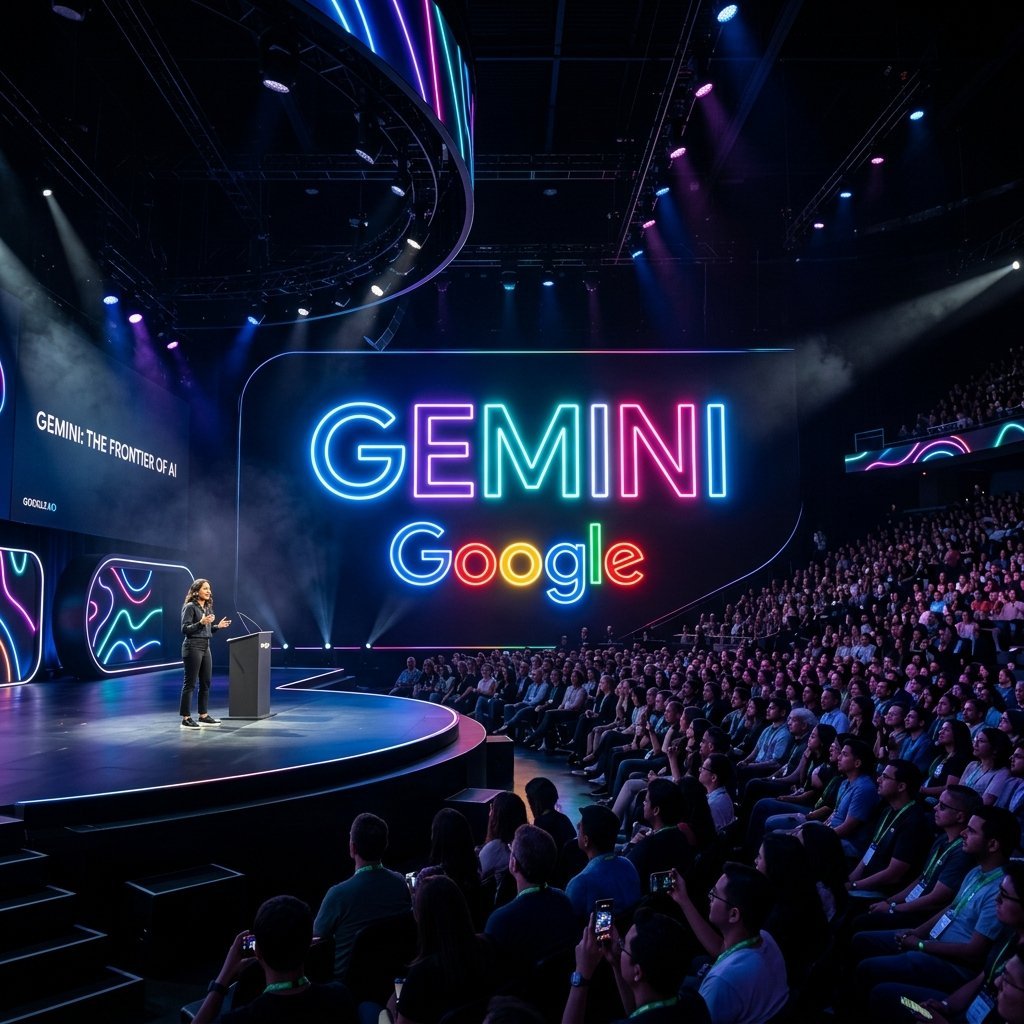
Waiting for a translator to parse text transcripts before spitting out a synthesized response is the primary bottleneck of global communication. On June 9, 2026, Google bypassed this limitation by launching Gemini 3.5 Live Translate. By replacing the traditional three-step translation loop with a single audio-to-audio network, the model interprets continuous speech in real time with original tone, emotion, and pacing intact.
- What Is Gemini 3.5 Live Translate?
- How Do Developers Access the Gemini Live Translate API?
- Does Gemini Live Translate Work Offline?
- How Does Audio-to-Audio Translation Differ From Speech-to-Text?
What Is Gemini 3.5 Live Translate?
Google’s Gemini 3.5 Live Translate is a specialized audio-to-audio model designed for near real-time, continuous speech translation across more than 70 languages. Unlike traditional translators, it processes raw audio signals directly, generating spoken output while the user is still speaking.
For decades, machine translation has relied on a cascade of distinct models. When a user spoke, a speech-to-text (STT) model converted the audio to text, a machine translation (MT) model converted the language, and a text-to-speech (TTS) engine synthesized the output. This pipeline introduces massive latency, making natural, fluid conversation impossible. The delay forces users to adopt a clumsy, turn-based communication style.
Gemini 3.5 Live Translate collapses this pipeline. By training a single neural network to translate audio directly to audio, Google has reduced latency to under 500 milliseconds. This enables the model to preserve prosody—the speaker’s original intonation, emotional undertones, and speech rhythms. In practice, this means if a speaker asks a question with rising pitch at the end, the translated output mirrors that exact vocal inflection in the target language.
How Do Developers Access the Gemini Live Translate API?
Developers can access Gemini 3.5 Live Translate in public preview through Google AI Studio and the Gemini Live API. By calling the model identifier gemini-3.5-live-translate-preview, software engineers can integrate low-latency, real-time audio translation directly into their web and mobile applications.
Google has positioned this technology as a core infrastructure product. Instead of keeping it locked inside consumer apps, the company opened public previews for developers. The Gemini Live API supports continuous WebSockets connections, allowing client applications to stream audio inputs and receive translated audio packages back in real time.
This model routing strategy represents a broader shift in the tech ecosystem. As analyzed during the hardware infrastructure race, developers are no longer routing all tasks to a single, monolithic model. Instead, low-latency audio interpretation is offloaded to Gemini 3.5 Live Translate, while complex logical processing is sent to reasoning models like GPT-5.5 or Claude 4.8.
Does Gemini Live Translate Work Offline?
Gemini 3.5 Live Translate requires an active internet connection to access Google’s cloud-based tensor processing units (TPUs). While a compressed on-device version is being developed for Pixel devices running Apple Intelligence and Android system architectures, the live API and Google Meet integrations currently process all translation pipelines in the cloud.
Running a native audio-to-audio network requires massive computational resources. Generating real-time audio waveforms requires continuous tensor evaluations that exceed the capacity of standard mobile neural processing units (NPUs). Consequently, the Google Translate app and Google Meet enterprise previews rely entirely on Google Cloud infrastructure.
This cloud dependency is a major factor in the AI productivity paradox. Companies integrating real-time translation into corporate workflows must budget for constant API token costs. While traditional text APIs are cheap, streaming continuous audio bandwidth introduces significant network overhead. For enterprises running international call centers or remote teams, these recurring cloud costs represent a major line item.
How Does Audio-to-Audio Translation Differ From Speech-to-Text?
Audio-to-audio translation differs from speech-to-text cascades by avoiding intermediate text conversion. Instead of parsing, formatting, and synthesizing written characters, the network translates raw acoustic features directly, saving processing steps and eliminating errors introduced by misheard words or punctuation issues.
In a traditional speech-to-text cascade, a single transcription error can ruin the entire output. If the STT model mishears “can’t” as “can,” the translation engine will translate the opposite meaning of the sentence. Text conversion strips away vocal metadata like sarcasm, urgency, and query inflections.
By translating audio features directly, Gemini 3.5 Live Translate maintains semantic continuity. The model maps the phonetic and vocal characteristics of the source audio to a high-dimensional space, matches them with target language patterns, and outputs synthesized audio directly.
Let us compare the system configurations:
| Feature | Audio-to-Audio (Gemini 3.5 Live) | Cascaded Pipeline (Traditional) |
|---|---|---|
| Processing Steps | 1 (Audio $\rightarrow$ Audio) | 3 (STT $\rightarrow$ MT $\rightarrow$ TTS) |
| Average Latency | Under 500ms | 2,000ms – 4,000ms |
| Prosody Preservation | Yes (intonation, pitch, pacing) | No (flat, synthetic TTS output) |
| Error Propagation | Low (direct mapping) | High (STT errors cascade through) |
| Primary Platform | Google AI Studio (Live API) | Google Translate App (Legacy) |
| Languages Supported | 70+ languages | 130+ languages (with delays) |
Key Takeaways
- Google Gemini 3.5 Live Translate runs as a single audio-to-audio network, bypassing traditional text-transcription loops.
- The model translates continuous speech with under 500 milliseconds of latency, allowing natural, overlapping conversation.
- Original prosody, including intonation, pacing, and pitch, is preserved and mapped directly into the target language.
- Developers can access the technology via the Gemini Live API using the model ID
gemini-3.5-live-translate-preview. - Workspace customers are currently trialing the system in private previews for Google Meet.
FAQ
What is Gemini 3.5 Live Translate?
Gemini 3.5 Live Translate is a specialized audio-to-audio model co-developed by Google to translate continuous speech in near real time. By avoiding the traditional intermediate text transcription steps, the model outputs translation streams in over 70 languages with under 500 milliseconds of latency.
How do developers access the Gemini Live Translate API?
Developers can access the model via Google AI Studio and the Gemini Live API by calling the model ID gemini-3.5-live-translate-preview. The API supports continuous WebSockets connections, allowing live audio streaming and immediate audio translation returns.
Does Gemini Live Translate work offline?
No, Gemini 3.5 Live Translate requires an active cloud connection to Google’s TPU architecture. While on-device models are under development for Android, the current preview API and enterprise Google Meet features require internet connectivity.
How does audio-to-audio translation differ from speech-to-text?
Audio-to-audio translation maps raw acoustic audio signals directly to target language audio waveforms without converting the words to written text first. This avoids translation errors caused by transcription issues and preserves vocal intonation and pitch.
Is Gemini Live API free to use?
During the public preview phase in Google AI Studio, access to the gemini-3.5-live-translate-preview model is available with rate-limited free tiers. Once the model transitions to general availability, Google will implement token-based pricing for audio input and output streams.
Sources
- Google Keyword Blog: https://blog.google
- Google AI Developer Portal: https://google.dev
- Google AI Studio API Reference: https://google.dev/models/gemini-3.5-live-translate