The Poarket Cheat Code
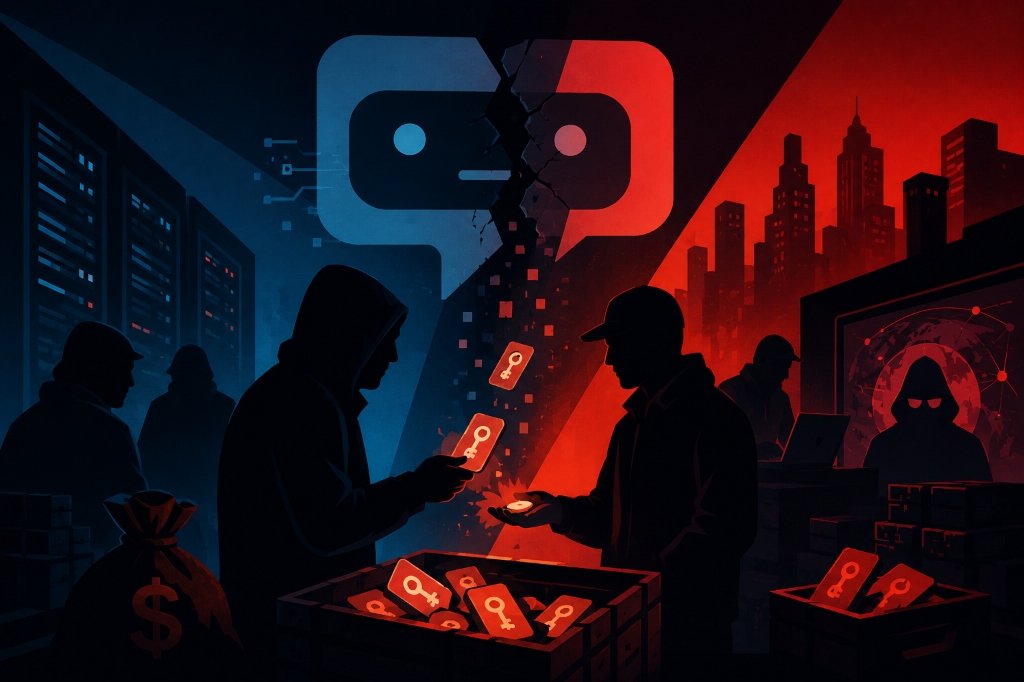
Prediction markets sell themselves as the ultimate arbiters of truth, but their own marketing relies on a carefully constructed illusion. A joint set of investigations by the Wall Street Journal and Politico has exposed how Polymarket, the current giant of the industry, paid influencers to display fake bets, simulated winnings, and completely fabricated trades on social media.
To make these fake winnings look convincing, the creators used a visual trick that hid the passage of time. In one viral video, an influencer wagers on whether Donald Trump will say “April Fools” on camera. The video shows the creator placing the bet, followed immediately by a cut to Trump speaking those exact words. In reality, the footage of Trump was recorded in March 2025, weeks before the bet was supposedly placed. The editing process simply stitched two separate moments together, hiding the time gap to make a lagging, impossible bet appear like a genius, real-time prediction.
This visual deception relied on a simple typo-squatting trick in the browser’s address bar. Viewers watching the screen-recording of the trade saw what they believed was the official Polymarket URL. Instead, the creators were using a cloned website hosted at poiymarket.com. By replacing the lowercase letter “l” in Polymarket with a capitalized “i” (which appears as “I” or a vertical line in standard sans-serif browser fonts), the creators built a URL that looked identical to the real platform on a low-resolution mobile screen. The viewer saw polymarket.com in their minds, but the browser was actually displaying a simulation.
Official Infrastructure: Backend Portals and PayPal CMOs
This was not a case of rogue creators designing fake screenshots in Photoshop. The investigations show that Polymarket provided these influencers with direct access passwords to an official backend “partner portal.” This portal was a functional simulation sandbox created by the platform itself, designed specifically to generate realistic, unplaced wagers that looked identical to live blockchain transactions.
The existence of this portal reveals that the deception was supported by official corporate infrastructure. It was not a lone influencer lying for clout; it was a company-sponsored ecosystem designed to manufacture trust through falsified data.
The corporate involvement reached the executive suite. Politico’s reporting revealed that Polymarket’s Chief Marketing Officer, Matthew Madabber, personally funded these promotions. Madabber used his personal PayPal account to distribute hundreds of thousands of dollars to approximately two dozen conservative and progressive commentators. By routing payments through a personal PayPal account and failing to mandate Federal Trade Commission (FTC) disclosures, the platform ensured the posts appeared to be organic user experiences rather than corporate advertisements.
The Casino Playbook Math
The financial reality of these trades is far different from the get-rich-quick narratives shown on social media feeds. The Wall Street Journal’s analysis of the promotional campaigns revealed a massive discrepancy between the simulated success and actual trading outcomes.
The data team isolated 118 high-profile promotional bets. According to the videos, the creators won a combined $900,000 in fake winnings. However, if a viewer had actually replicated those exact trades in the real market, they would have faced $166,000 in actual losses. More than half of the featured wagers would have ended in immediate debt. The “wins” only existed because the bets were placed on a simulated portal where financial risk was entirely absent.
This marketing strategy mirrors the classic casino playbook. The platform hypes up the tiny percentage of massive wins while completely obscuring the statistical certainty of loss. However, while casinos are bound by strict state regulations and mandatory disclosure laws, prediction markets have spent years arguing they are not gambling platforms. Instead, they position themselves as sophisticated “event contracts” designed to hedge economic exposure, escaping the regulatory oversight of the Commodity Futures Trading Commission (CFTC) while exploiting the same psychological triggers.
The Economics of Micro-Influencer Silence
The payment structure for these campaigns was engineered to exploit mid-tier content creators. According to payment records, most influencers received between $2,000 and $3,000 per month.
This price point is the sweet spot for exploitation. For a micro-influencer with a moderate following, $2,500 a month is enough money to secure their compliance and buy their silence. It is not large enough to trigger corporate compliance audits or require complex contract disclosures, but it is high enough that a young creator will hesitate to question the ethics of the arrangement. By keeping the payments small, Polymarket was able to scale the program across dozens of creators, building a decentralized marketing network that operated completely under the regulatory radar.
AI Hallucinations: When the Loop Eats Itself
The consequences of this manufactured reality have already begun to leak into other technologies, creating a feedback loop where artificial intelligence consumes its own noise.
Following the publication of the investigations, popular internet commentator Dolan Dark pointed out how Google’s AI overview tools scraped the news reports. Because the AI model was trained on the high volume of search noise surrounding the scandal, it hallucinated the facts, falsely accusing innocent creators of running the scam simply because their names were mentioned in the surrounding commentary. The fake reality has begun to eat itself: search engines trained on internet gossip now generate false accusations based on the very noise the platforms manufactured.
The Self-Auditing Illusion
In response to the investigations, Polymarket issued a statement declaring its commitment to “accurate, fair, and transparent markets.” The company announced it plans to conduct a “comprehensive audit” of its active promotional content to restore audience trust.
This response is itself a continuation of the same PR loop. The platform built a system to manufacture trust through fake URLs and secret PayPal accounts, and it is now using the language of corporate governance to manage the fallout. An audit conducted by a firm hired by the platform is simply another layer of the simulation. If a platform is willing to build a simulated portal to fake its bets, there is no logical reason to believe it won’t use the same tools to fake the audit.
Sources
- The Wall Street Journal: Investigation on Polymarket’s paid promotions and simulated trading portals, June 2026.
- Politico: Report on undisclosed influencer payments and CMO PayPal transactions, June 2026.
- Federal Trade Commission: Guidelines on advertising disclosures and influencer marketing regulations.
About the Author
Your 32-year-old cousin who lost his savings on a prediction market contract about the release date of GTA 6, lives in a room filled with whiteboard drawings of market charts, and refuses to buy groceries unless he can hedge the transaction on a blockchain.