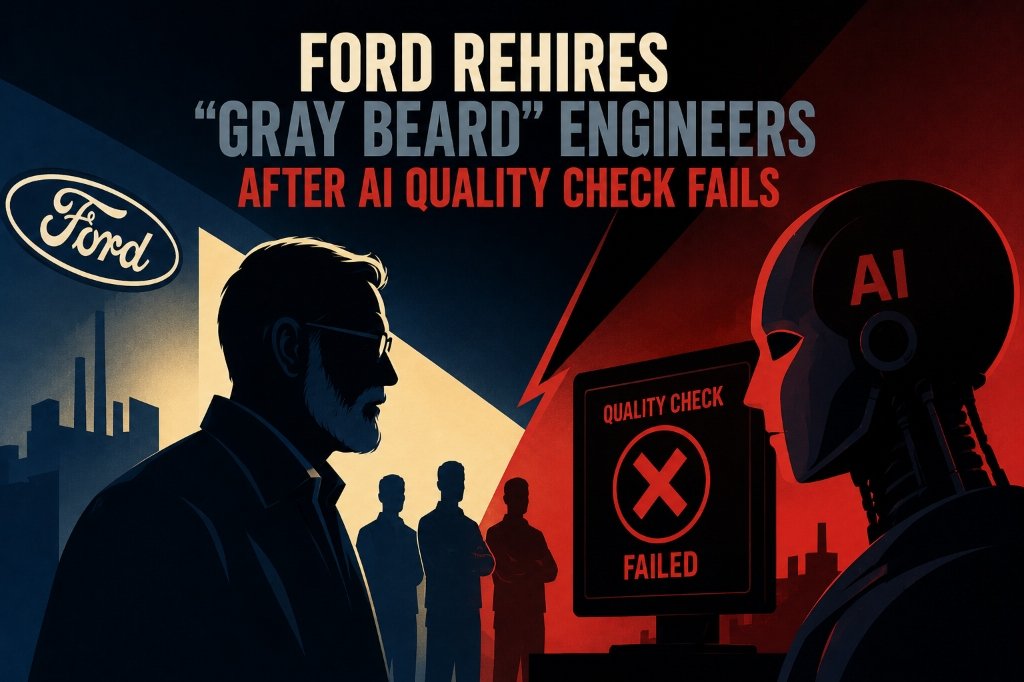
Automating complex physical systems with neural networks sounds like an easy corporate cost-saving measure until the recalls start piling up. Ford executives recently admitted to over-relying on automated quality checks and software systems, mistakenly believing that introducing AI would automatically yield a high-quality product. To resolve the resulting assembly defects, the automotive giant had to quietly bring back hundreds of its most experienced retired staff.
- Why Did Ford Rehire Retired Veteran Engineers?
- What Is the Tacit Knowledge Gap in AI Systems?
- How Does Human in the Loop Control Improve Industrial Testing?
- Key Takeaways
- FAQ
- Sources
Why Did Ford Rehire Retired Veteran Engineers?
Ford rehired approximately 350 retired veteran engineers—known internally as “gray beards”—after automated software checks and AI quality systems failed to catch cross-disciplinary defects on the assembly line. The return of these veterans followed a series of vehicle recalls and quality control issues that automated systems were unable to diagnose.
The decision reflects a broader realization in heavy industry: automated checks are excellent at running repetitive, rule-based tests, but they struggle with complex, physical anomalies. In automotive engineering, a rattle, an engine tick, or a slightly misaligned transmission casing is often detected through human sensory judgment and intuition. By replacing senior inspectors with automated sensors, Ford cut costs initially, but saw recall rates rise as subtle assembly flaws slipped through the automated net.
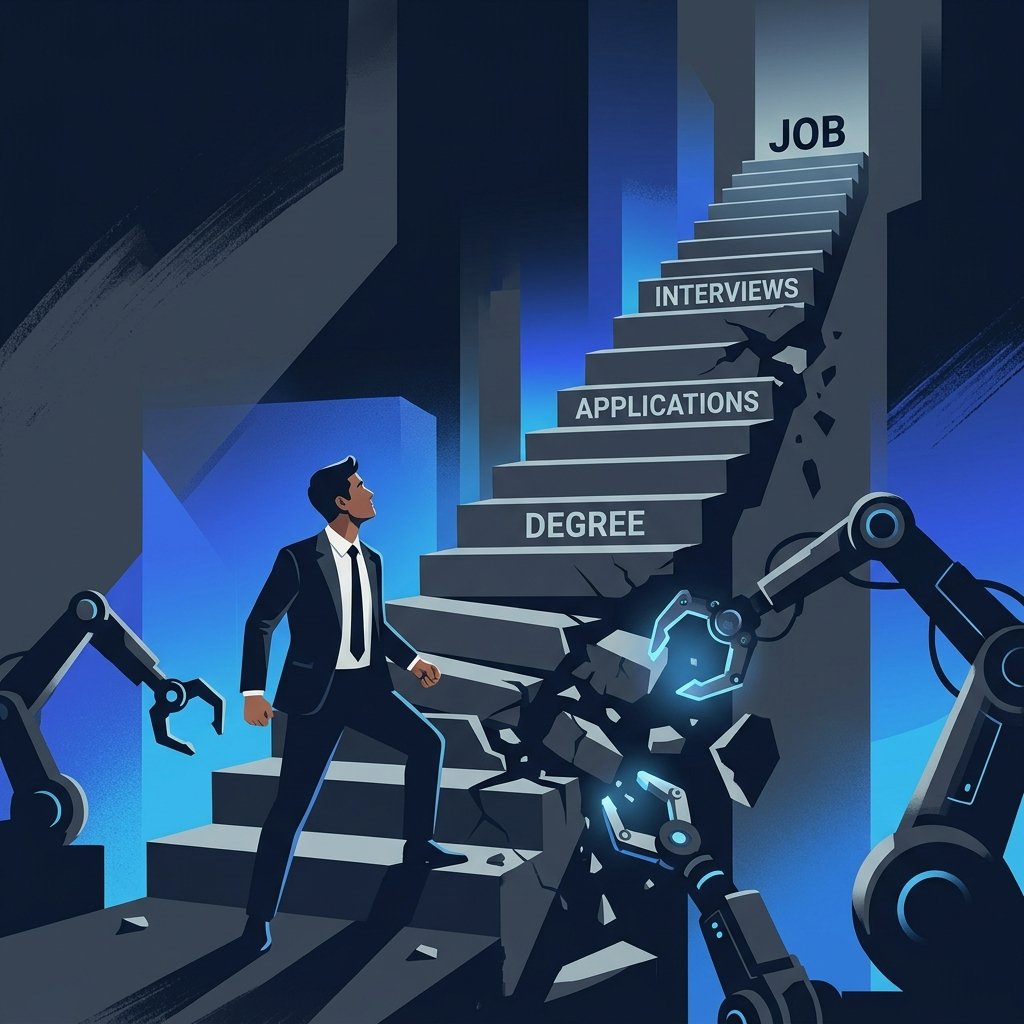
To reverse the trend, Ford brought back its veterans to lead design reviews and mentor younger, less experienced staff. These younger hires represent a workforce facing a distinct entry-level jobs crisis where junior training has been outsourced to software tools. Bringing back retirees was the only way to patch the immediate knowledge gap.
What Is the Tacit Knowledge Gap in AI Systems?
The tacit knowledge gap in AI systems refers to the inability of software models to capture the intuitive, unwritten experience that human experts accumulate over decades of practical work. Because this expertise is rarely documented in databases, it is omitted from the datasets used to train neural networks.
In heavy engineering, much of what makes an engineer effective is not found in textbook rules or database logs. It is the intuitive understanding of how different materials interact under stress, how a specific machine vibrates when it is slightly out of alignment, or how a minor design adjustment in one component affects an entirely different subsystem.
| Knowledge Type | Digitization Difficulty | AI Training Viability | Engineering Example |
|---|---|---|---|
| Explicit Knowledge | Very Low | Highly Viable | Torque specifications, standardized test scripts, part dimensions |
| Process Knowledge | Low to Moderate | Moderately Viable | Step-by-step assembly workflows, regulatory compliance checks |
| Tacit Knowledge | Extreme | Not Viable | Diagnosing an anomalous engine vibration by sound, material feel |
When experienced engineers retired or left the company, their tacit knowledge left with them. The AI systems that replaced their roles were trained exclusively on explicit, structured data, leaving them blind to the physical nuances of vehicle assembly. Just as tech firms are finding that custom chips like Jalapeño require massive physical engineering investments to design, automotive quality requires real-world physical experience that software cannot simply simulate.
How Does Human in the Loop Control Improve Industrial Testing?
Human in the loop control improves industrial testing by combining the scale of automated software checks with the qualitative judgment of experienced specialists. By placing veteran engineers in oversight positions, companies can use AI to run thousands of tests while relying on human intuition to catch edge-case failures.
Following the rehiring of its veteran engineers, Ford restructured its assembly line workflows to prioritize human oversight. Rather than treating AI as a total replacement for human judgment, the company implemented over 100,000 automated tests that are continuously reviewed and refined by senior staff. The veterans use their experience to correct the automated systems, identifying when an AI-powered camera or sensor has misclassified a complex defect.
The impact of this turnaround was documented in recent consumer metrics. Following the restructuring, Ford topped the list of mainstream brands in the J.D. Power Initial Quality Study for the first time in 16 years. The victory demonstrates that the most effective use of AI in physical manufacturing is not full automation, but the reinforcement of experienced human workers.
Key Takeaways
- Ford rehired approximately 350 retired veteran engineers to resolve assembly line quality issues that automated AI checks failed to identify.
- AI models suffer from a tacit knowledge gap because they cannot be trained on the unwritten, intuitive physical experience of human specialists.
- Over-reliance on automated checks led to an increase in vehicle recalls before the company brought back human oversight.
- Automotive quality improved significantly after implementing a human-in-the-loop workflow, leading to a rise in J.D. Power Initial Quality rankings.
- The incident highlights the limitations of software automation in replacing senior engineering roles in physical manufacturing.
FAQ
Why did Ford rehire retired engineers?
Ford rehired approximately 350 retired engineers because its automated AI quality checks were failing to identify complex assembly defects. The company needed the physical experience and unwritten knowledge of these veterans to catch vehicle flaws and mentor younger engineering staff.
What is the tacit knowledge gap in artificial intelligence?
The tacit knowledge gap is the limitation where AI models cannot capture the intuitive, hands-on experience that human experts accumulate over decades. Since this practical knowledge is unwritten and cannot be easily digitizable, it is omitted from model training datasets.
How did Ford improve its vehicle quality ranking?
Ford improved its vehicle quality by shifting from total AI automation to a human-in-the-loop workflow. By pairing automated test suites with the qualitative oversight of experienced veteran engineers, the company topped the mainstream brand J.D. Power Initial Quality Study.
Can AI replace experienced engineers in manufacturing?
AI is highly effective at running repetitive, rule-based test scripts, but it lacks the cross-disciplinary judgment required to diagnose complex physical defects. The Ford case study indicates that total automation fails without senior human engineering oversight.